BUYING GUIDE · HARBOR LUX
Magnetic screen doors can be useful for hands-free pedestrian access and ventilation while helping reduce insect entry. They work only as well as the complete opening: mesh, edges, mounting, bottom clearance and re-closure all matter. A screen that leaves gaps or stays open after passage cannot provide the same barrier as one that returns correctly. It is not an insulated, weather-sealed or security door.
This guide helps you decide whether the idea suits your doorway before ordering. It is a selection and observation checklist, not a product comparison test or a measured insect-exclusion claim.
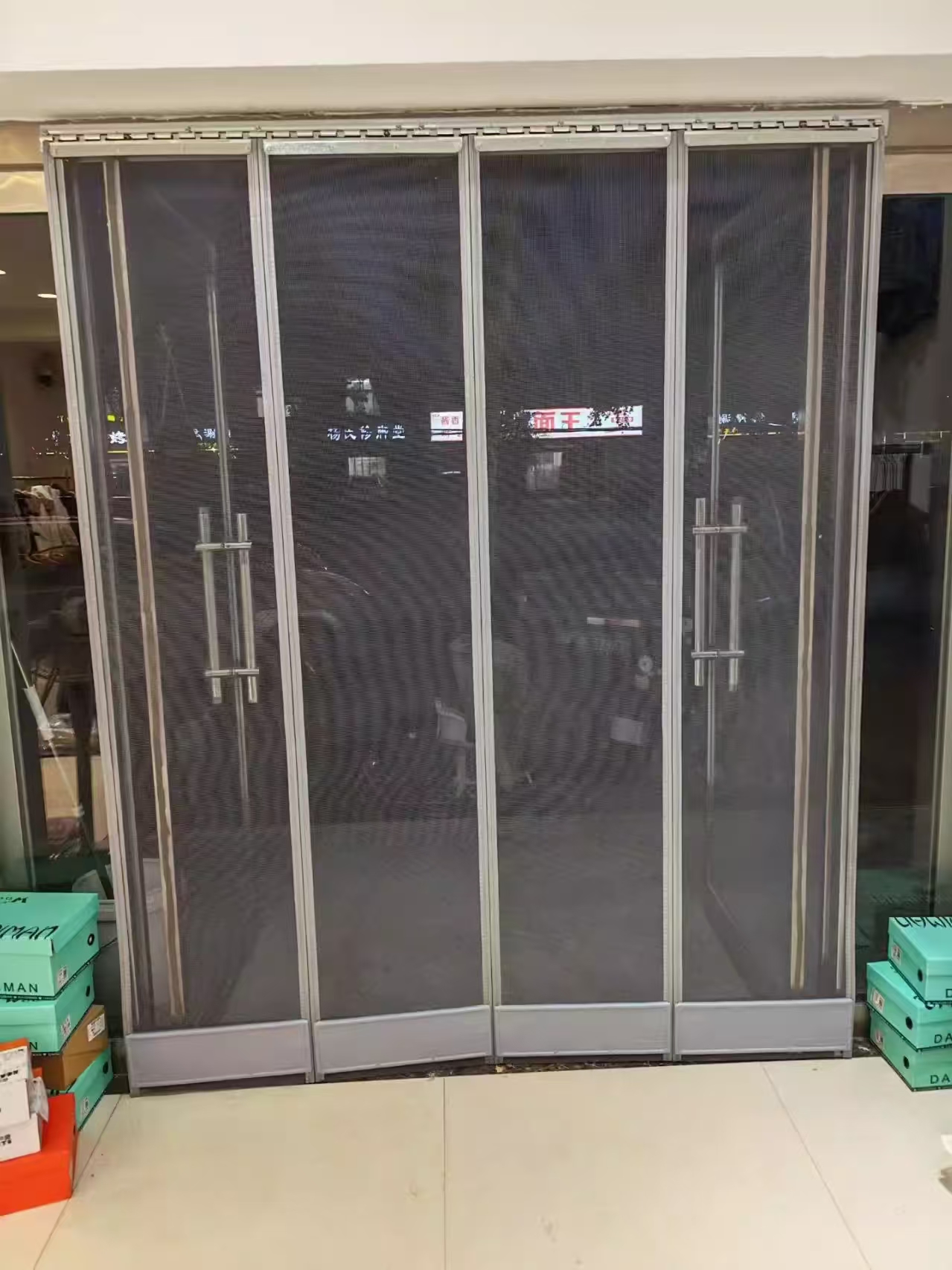
How do magnetic screen doors work?
The mesh covers the opening while allowing air through. Magnetic closing edges help neighbouring sections meet after someone passes. Mounting holds the assembly in position; it does not remove the need for correct dimensions and free panel movement.
Do not assume every magnetic screen uses the same structure. Many household kits are centre-split mesh with hook-and-loop fixing. The household products tested by Bob Vila illustrate several fixing and closure arrangements. Their test results concern those products, not Harbor Lux.
Harbor Lux’s reinforced hanging-panel magnetic screen door instead uses a top suspension track, separate hanging panels, reinforced borders and vertical magnetic edges. Follow the instructions for the supplied system; do not transfer a household adhesive-kit installation method to a loaded track.
Are magnetic screen doors any good for your doorway?
Start with the job you need the opening to do. “Heavy duty” is not, by itself, a mesh specification, wind rating or proof of service life.
| Your priority | What to check | Decision boundary |
|---|---|---|
| Airflow with pedestrian access | Clear passage, mounting space, mesh coverage and closure after ordinary use | A possible fit if the actual layout works; do not assume universal compatibility |
| Fewer flying insects entering | Mesh specification, tears, perimeter gaps, lower edge and open time | A screen is one barrier, not a guarantee against every insect |
| Pets passing through | Pet behaviour, supervised movement, snagging and closure afterwards | Not pet containment or an assurance against claws and biting |
| Temperature separation or rain exclusion | Whether an open mesh meets the actual requirement | Do not choose mesh as a substitute for a thermal or weather-sealed door |
| Strong wind, security or vehicle traffic | Verified design suitability and the separate doorway requirements | Do not infer suitability from magnets or reinforced edging |
For a shop entrance, also consider whether customers can understand the passage and whether the curtain interferes with the existing door. A wider custom opening needs its own panel layout; width alone does not prove that a standard screen can be stretched to fit.
What can stop a magnetic screen door from working well?
Gaps that bypass the mesh
Inspect the whole perimeter, not just the centre seam. An intact mesh does not resolve a gap beside the frame or beneath a displaced panel. Ask for the mesh and finished coverage specification rather than relying on a photograph or the phrase “insect-proof.”
Panels that cannot move back freely
Twisted edging, an incorrect panel position, floor contact or an obstacle can prevent re-closure. Stronger magnets are not automatically the right fix. Check the agreed layout and supplied instructions before changing components.
Nearby metal or operating air movement
Watch whether a magnetic edge catches an adjacent metal door or fitting. A published household-screen trial describes that happening with a metal door. It is a useful check, not evidence that every system will behave that way.
Observe the opening during normal ventilation, nearby door use and outdoor exposure. A screen closing in still air does not establish a wind rating. Do not deliberately create unsafe gusts or add unapproved weights to prove performance.
How to check fit and closure at your own opening
The following is a practical observation routine, not a certified test. Use the manufacturer’s instructions and agreed order drawing as the reference. Keep people clear of loose hardware; an insecure mounting needs an installer review before further use.
- Identify the system. Record whether it is an adhesive household kit, a suspended reinforced assembly or another design. Note the product version and supplied layout.
- Check it at rest. Take a front photograph showing the complete opening, then close-ups of the upper edges, seams and bottom. Look for persistent gaps, twisting, damage and contact with the floor or door.
- Observe ordinary passage. Walk through in the intended way and allow the panels to return without pulling them shut. Repeat from the other side where access is intended. Record whether the same section repeatedly remains open.
- Repeat under normal site conditions. Note nearby doors, fans and outdoor air movement. Compare with the calm observation without changing several settings at once.
- Record the result. Use the table below, keep the original video and note any changes. Send unresolved observations to the supplier before cutting material or replacing magnetic edges.
| Observation | What to record | When to ask for review |
|---|---|---|
| Coverage at rest | Gap location, photograph and drawing reference | Coverage differs from the agreed arrangement |
| Closure after passage | Direction of passage and section that stays open | Repeated incomplete closure without manual help |
| Bottom movement | Floor contact, threshold and obstructions | Dragging, snagging or damaged lower components |
| Normal air movement | Conditions, nearby equipment and closure behaviour | Opening remains displaced during ordinary operation |
| Mounting and edges | Loose fittings, tears, seams and changes since installation | Any insecure assembly or progressive damage |
A successful closure observation means the assembly returned as observed under those conditions. It does not measure insect reduction, scratch resistance, wind resistance or long-term durability. Those claims need their own evidence.
If the screen is already installed and failing, use the separate magnetic screen door closing troubleshooting guide. It covers the fault-finding sequence in more detail.
Questions to settle before buying
Should it go inside or outside?
Choose the position from the actual door movement, mounting surface, clearance, exposure and system instructions. There is no single answer for every door. Send photographs with the existing door both open and closed so interference can be reviewed.
Will it stop a dog or keep mice out?
Do not use a walk-through magnetic screen as a containment or security barrier. Pet access and preventing an animal from leaving are different tasks. Ask for a suitable separate solution when containment or rodent exclusion is essential.
Can I trim it if the size is wrong?
Do not assume so. Cutting can affect edging, magnetic sections and lower components. Confirm finished dimensions and any permitted adjustment with the supplier before ordering or altering the screen.
Does more weight or more magnets mean better performance?
Not on its own. The complete assembly must still move appropriately for the intended user and return correctly. Compare the finished design, fixing requirements and evidence rather than ranking products by one component count.
Prepare a clearer custom-screen enquiry
Send the opening width and height with units, front and side photographs, door movement, mounting surface, traffic and any pet use. Include the quantity, destination country and postal code, and explain whether your main goal is ventilation, insect screening or another requirement.
Harbor Lux is a trading partner. Eligible finished configurations are available from one piece; final material, panel layout, fittings, suitability and shipping are confirmed in the quotation. This guide does not assign an unverified fibre composition, mesh opening size or performance rating to your order.
Request a doorway configuration review and quote including shipping.
Prepared by Harbor Lux · Published 16 October 2026. Practical recommendations are not certified testing or a guarantee of site performance.